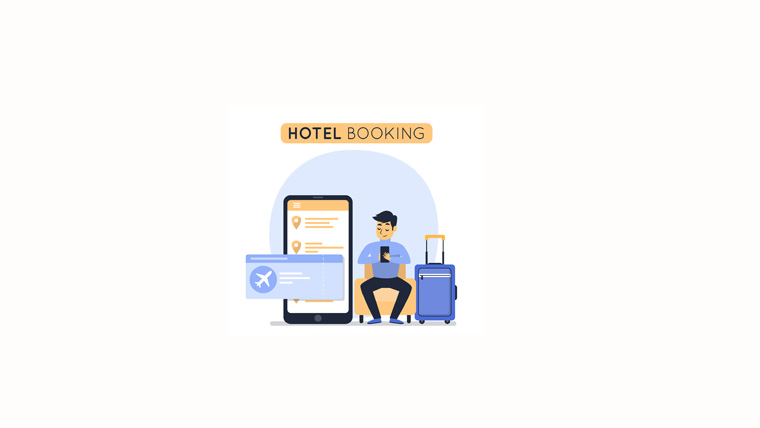
If you’re still asking guests to go to our website and fill a form, you’re already a step behind. Modern day travelers book on the go between errands, at kids practice, or while commuting. They want a quick answer and a one tap path to pay. Voice calls and WhatsApp chats meet them where they already are, and when you connect those conversations to a modern hotel booking engine, you turn intent into confirmed stays with far less friction. This isn’t a fad, it’s a usability shift. The hotels that adapt now will keep more direct revenue and rely less on costly OTA traffic with whatsapp booking.
Picture a traveler in Phoenix on a Thursday evening. They’ve just finished a long day, they’re juggling a youth-soccer pickup, and their laptop is still in a backpack that won’t be opened again tonight. They need a room for the weekend—pet-friendly, late checkout, near the freeway. If your hotel’s only path to book is “go to our website and fill out the form,” you’ve already lost them to a brand that replies in seconds over a channel they’re using right now.
That’s the promise of Voice and WhatsApp bookings when they’re plugged directly into a modern hotel booking engine. It’s not shiny tech for its own sake. It’s a more human path to the same outcome, a confirmed reservation with fewer steps, less doubt, and more direct revenue. The winners in hospitality over the next year won’t be the loudest brands but they’ll be the ones who answer simply, quickly, and personally on the channels guests already trust.
Why conversations convert when clicks don’t
Web pages are great at presenting options. They’re less great at resolving hesitation. A traveler who’s ninety percent ready to book often stalls on small but important details: “Will the king room really fit a pack-n-play? Can I bring my dog? Is late checkout possible if my flight’s at 3pm?” On a mobile screen, those answers might be three menus deep. In a WhatsApp chat or a short call, they’re resolved in under a minute.
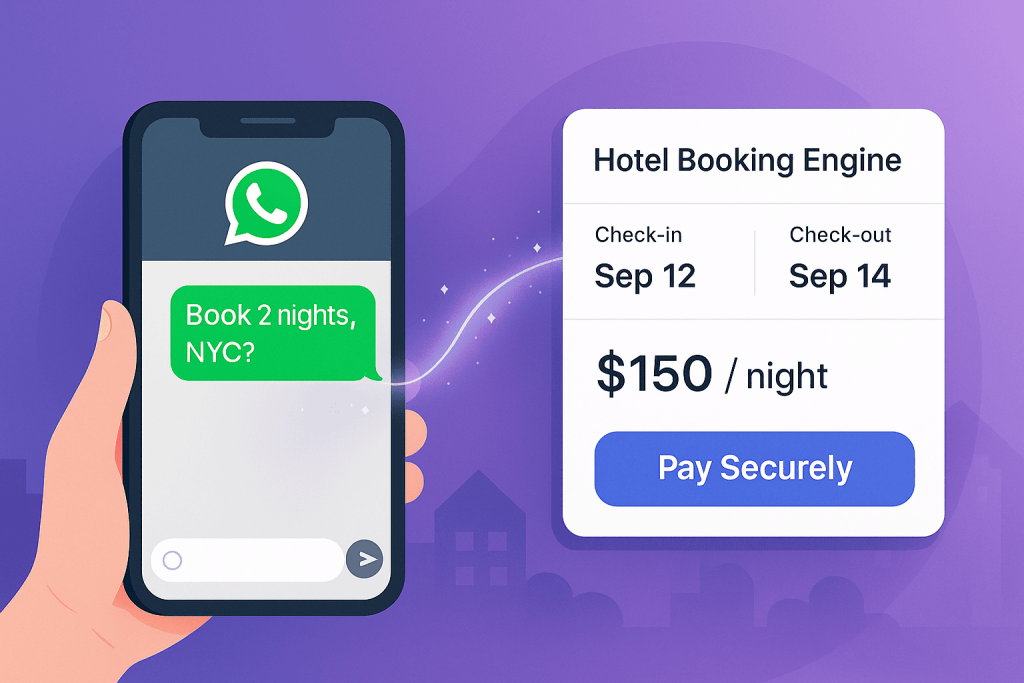
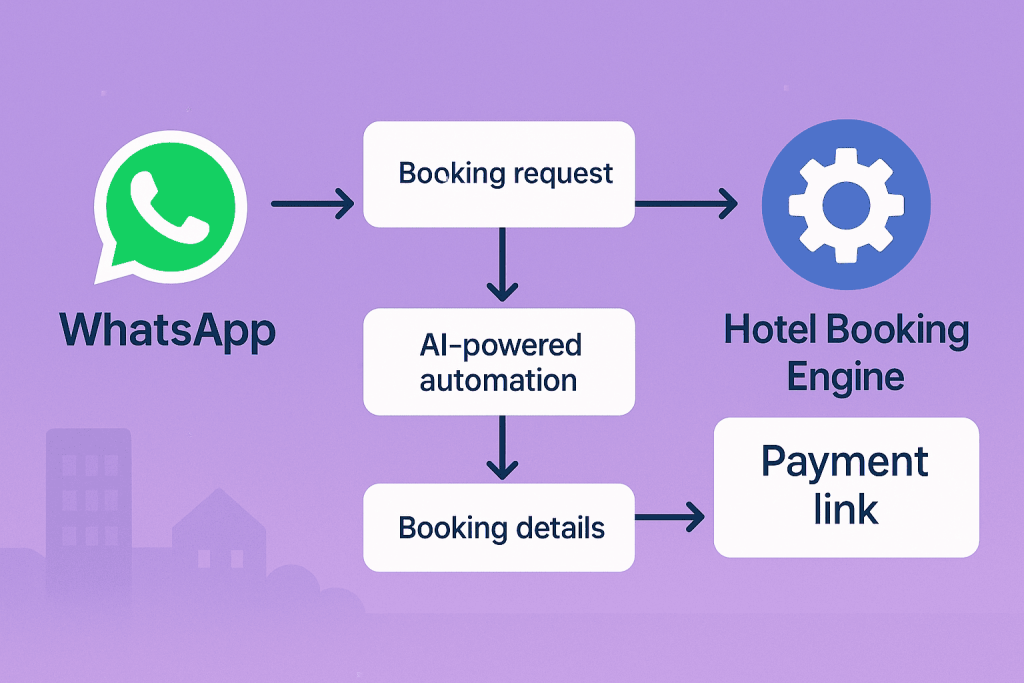
When that conversation is wired to live rates, real availability, and policies inside your hotel booking software, you remove all the friction we’ve trained guests to tolerate. Instead of dumping them back onto a form, you send a secure pay link. They tap Apple Pay or Google Pay and—done. No tab juggling, no abandonment spiral. The confirmation hits their inbox while the conversation is still open, which feels reassuring and “high-touch,” even when an AI assistant handled most of the work.
It’s not about replacing staff. It’s about removing wait.
A common fear is that “AI booking” means turning your front desk into a bot farm. In practice, the opposite happens. Conversation flows that used to bounce between voicemail, email, and a half-completed cart turn into smooth handoffs. A guest asks a question in WhatsApp. Your assistant checks inventory, proposes two options that actually fit the brief, and sends a short summary that makes the choice obvious. If a curveball appears an unusual accommodation request, a rate exception, a stuck payment—the assistant escalates to a human who’s already looking at the full context. Staff time shifts from chasing to closing.
Guests feel the difference immediately. They’re not pushed. They’re helped. And because the same booking engine powers your website and your conversations, the answers are consistent: the same prices, the same rules, the same promos.
Reality Check (Mobile first, Wallet first, and Impatient)
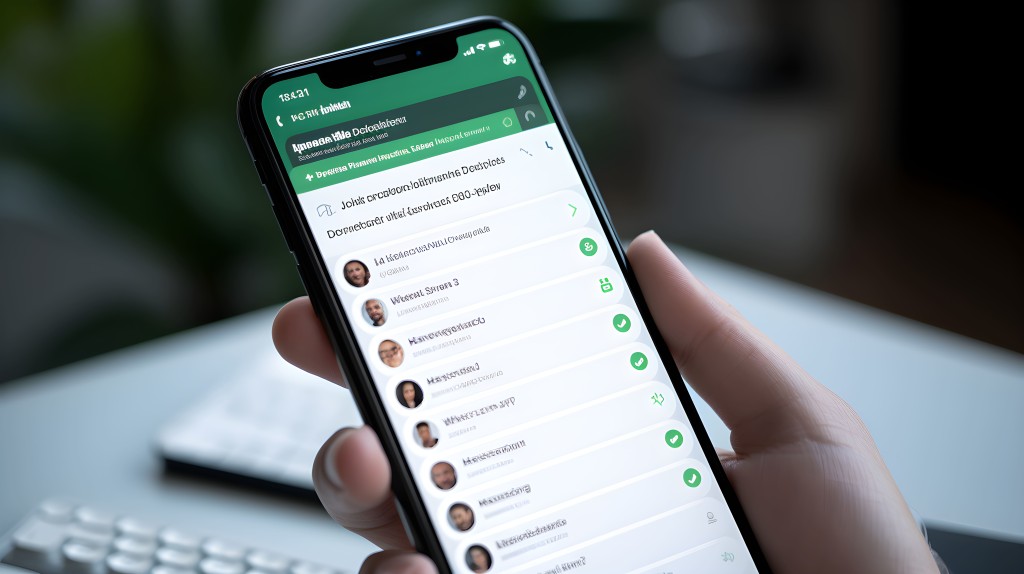
If you operate in the travel industry, you already know the cadence of peak demand. Thursday evening for weekend stays. Sunday night for business travel. Holidays that bunch requests into short, frantic windows. In those windows, the brand that replies fastest wins not because it’s the cheapest, but because it’s the easiest. A verified WhatsApp Business profile with your logo and business details, or a friendly human voice that can send a payment link during the call, feels safe and convenient. It collapses the gap between “Do you have a room?” and “I’ve paid.”
Find the right license for your full travel stack. View Pricing →The payment step is where many properties quietly lose direct bookings. Guests don’t want to read card numbers over the phone. you don’t want to store them. The fix is simple: push a PCI-aware payment link that loads with the stay summary and totals, supports one-tap wallets, and confirms instantly. It’s the moment that turns a conversation into revenue.
Where AI actually helps (and where humans should stay in the loop)
AI shines at the unglamorous parts of service, confirming dates in plain language, checking conflicting requests, calculating totals with fees, and recognizing the moment hesitation creeps in. It can notice long pauses after a payment link and nudge politely. It can explain policies without legalese. It can remember that the guest asked about dog-friendly dining and send a short list after confirmation.
But it shouldn’t run the show alone. Edge cases still deserve human judgment, comping a fee after a service issue, approving late checkout on a sold-out Sunday, troubleshooting a payment failure for an international card. The best conversational booking setups assume humans are available when the stakes are high and the situation is messy. AI gets you to the right fork in the road; your team makes the call.
Security and compliance without drama
Collecting card numbers in chat or over the phone is a risk for everyone. Pushing payments to a verified, secure link avoids the problem entirely. Your booking engine handles the checkout and tokenization through your gateway; neither WhatsApp nor your phone system stores sensitive data. If you operate in California or market to Californians, you’ll also want a simple CCPA statement in your privacy policy that explains how you handle chat/call logs and how travelers can opt out. None of this needs to be a project; it’s table stakes you can meet with the right plumbing.
The numbers you’ll want to watch
You don’t need a brand-new dashboard to see if this is working. A handful of metrics tell the story clearly: how quickly you respond during business hours, how often conversations become bookings, how many payment links are opened and completed, and how much of your direct revenue now includes Apple Pay or Google Pay. If those lines are moving in the right direction, you’re building a healthier direct channel with lower acquisition costs than OTAs.
Experience end-to-end travel workflows with PHPTravel Live Demo →Rolling it out without breaking what works
Most hotels can stand up a pilot in a few weeks. Start with a dedicated WhatsApp Business number and a reliable voice line. Map a short list of high-intent questions—availability by date, pet policy, ADA rooms, parking, late checkout—and connect those to live answers from your hotel booking engine. Train your assistant on the tone and guardrails you want. Then run it during your known peak windows, with a human on call for escalations. You’ll quickly learn which answers need better wording and where a little flexibility unlocks a lot of revenue.
Once you see bookings coming through, promote the channel. Add “Message us on WhatsApp” to your footer and contact page. Use click-to-WhatsApp ads during local events. Encourage satisfied guests to save your number. The goal isn’t to replace your website, it’s to put a shorter bridge beside it for people who don’t have the time or patience to cross the long one.
This is about momentum not magic
The hospitality brands that feel “modern” aren’t necessarily the ones with the fanciest apps. They’re the ones that waste the least time. Voice and WhatsApp bookings, backed by a trustworthy booking engine, do exactly that. They respect the way people actually plan and pay, they keep rate integrity by drawing from one source of truth, and they make your staff look like heroes instead of help-desk operators.
Ready to Transform Your Hotel Bookings?
Our Hotel Booking Engine delivers real-time availability, day-wise & seasonal pricing, supplier extranet, and automated confirmations—all with open-source flexibility. Launch fast, sell more, and give guests a smoother path to checkout.
Why teams choose PHPTRAVELS
- Live inventory sync with conflict-free calendar management
- Dynamic pricing (day-wise, seasonal, promos & coupons)
- Supplier extranet for content, rates & availability
- Multi-currency payments with instant e-vouchers
- Open-source code for full customization & integrations
Next steps
▶ Live Demo 💲 View Pricing30-day guarantee • 24/7 premium support • 4,500+ deployments
Frequently Asked Questions
Tap a question to reveal the answer.
Q1 Does the booking engine support real-time availability and calendar sync? ⌄ Yes. Our engine maintains live inventory with Availability updates propagate instantly across the website, supplier extranet, and connected APIs to prevent double bookings. Q2 Can we manage dynamic pricing (day-wise, seasonal, promos & coupons)? ⌄ Absolutely. Configure day-wise rates, seasonal calendars, special events, member pricing, and coupon-based promotions. Rates recalculate at search time so guests always see current, transparent prices. Q3 What is the supplier extranet and who can use it? ⌄ The extranet is a secure portal where hotel partners update content, rates, inventory, and restrictions. Role-based access lets you grant editors, revenue managers, or property owners the exact controls they need— reducing admin workload while keeping quality high. Q4 Which payment methods and currencies are supported? ⌄ We integrate with multiple gateways (credit/debit cards, PayPal, and more) and support multi-currency checkout. Choose deposits or full pre-payment. Guests receive instant e-vouchers and invoices, and your team gets automated confirmations. Q5 How long does it take to go live and what’s the setup flow? ⌄ Most teams launch in 1–2 weeks. Import properties, rooms, and policies; connect your payment gateway; set up taxes & fees; then invite suppliers to the extranet. A Live Demo helps you copy a proven configuration quickly. Q6 Is the platform secure and compliant for global sales? ⌄ Yes. We support HTTPS/SSL, fraud checks, and GDPR-friendly data handling. Use PCI-aware payment flows via your chosen gateway, and localize by country with languages, currencies, and taxes.Final Thoughts
If you’re ready to experience the flow yourself, take ten minutes and click through the Live Demo. If you’re already convinced and want a straight path to launch, our Pricing page shows the plans most US properties choose. Either way, the quiet shift toward conversational booking is here. The sooner you offer it, the sooner those late-evening “Do you have a room?” pings start turning into revenue you didn’t have to fight an OTA to keep.